
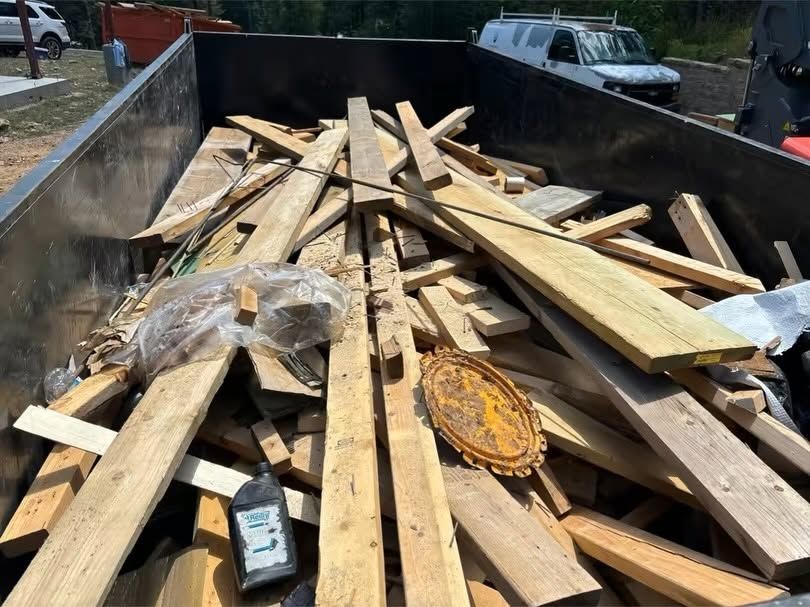
Job Site Waste Hauled in One Trip
Construction debris removal in Little Rock for remodels that turn up plaster, lath, old lumber and tile
Remodeling older homes in Hillcrest and Sherwood frequently exposes materials like plaster walls over wood lath, dimensional lumber cut to non-standard sizes, and ceramic or clay tile set in thick mortar beds, all of which are heavy, bulky, and difficult to handle without damaging surrounding finishes or the property itself. A-State Junk Removal & Hauling LLC hauls construction debris, drywall, lumber and job site waste across Little Rock and North Little Rock, with one local crew that handles the loading and hauling directly so there's no delay waiting for a separate hauler to coordinate with a cleanup team. Free quotes are available for remodels and demolition cleanups, and the crew works around active job schedules to keep the site clear as work progresses.
You tell the crew what the job produced, estimate the volume, and specify the timeline, and they load the material by hand or with carts and haul it away in one trip. Careful loading prevents nails, screws, or sharp edges from damaging doorways, flooring, or landscaping along the path from the work area to the truck, which matters when the property is occupied or when finished spaces surround the construction zone.
Contact the crew to describe the debris type and volume and confirm whether disposal fees are included in the quote.
How Construction Debris Removal Addresses Site Congestion
Construction sites accumulate waste in layers—drywall scraps, cut lumber, packaging, fasteners, and demolished material—and that clutter slows progress when workers navigate around piles or when tools and materials have no clear staging area. The crew loads everything into the truck in sequence, starting with the largest or most obstructive pieces, and hauls the full load to a disposal site in one trip rather than leaving partial loads for a return visit.
After removal, the site is noticeably clearer: floors are visible, walkways are open, and there's space to stage the next phase of materials or tools. Workers no longer step over piles or move debris twice, and the risk of punctures or cuts from exposed nails and metal edges drops once the waste is off the property.
Confirm up front whether the quoted price includes disposal fees, which vary depending on material type and landfill requirements, and whether multiple loads or extended jobsite access changes the cost. Some renovation debris includes materials that can be recycled—metal studs, copper pipe, clean wood—and the crew will separate those if it reduces disposal costs or if local regulations require it.
Questions Before Starting Your Project
Construction debris jobs depend on the material produced, the site layout, and the disposal requirements, so these answers focus on how the work unfolds.
What happens during the initial walkthrough?
The crew assesses the type and volume of debris, identifies the path from the work area to the truck, notes any access restrictions like narrow gates or stairs, and confirms whether the material includes items that require separate disposal such as treated lumber or asbestos-containing materials.
How does the crew protect finished areas during removal?
They lay down protective sheeting or plywood along high-traffic paths, use carts with rubber wheels on hardwood or tile floors, and carry sharp or heavy pieces in pairs to prevent dragging that could gouge walls or thresholds.
How is drywall debris loaded differently than lumber?
Drywall is dusty and breaks into irregular pieces, so it's bagged or stacked flat in the truck to reduce shifting, while lumber is bundled with protruding nails removed or bent flat to prevent punctures during transport.
What should contractors confirm before scheduling a haul?
Confirm the debris type, approximate volume in cubic yards or truck loads, whether the site has vehicle access or requires hand-carrying through a house, and whether disposal fees are included or billed separately based on landfill charges.
How quickly can the site be cleared after the crew arrives?
Most single-family remodel cleanouts are loaded and hauled in one visit lasting two to four hours, depending on debris volume and how far the material must be carried, and the site is left swept and ready for the next work phase.
A-State Junk Removal & Hauling LLC loads and hauls construction debris with a single crew that works directly with contractors and homeowners, and free quotes are available before scheduling. A-State Junk Removal & Hauling LLC also hauls construction debris in Benton, Conway, SEARCY, Bryant and Cabot. Call A-State Junk Removal & Hauling LLC at (501) 230-8662 to schedule a site visit and confirm your cleanup timeline.